Data-Driven Duels: Premier League Goals and UFC Knockouts Through Sharp Odds Hunts
Katja Beck · Apr 8, 2026

Data-Driven Duels: Premier League Goals and UFC Knockouts Through Sharp Odds Hunts
Unlocking Premier League Goal Markets with Advanced Metrics
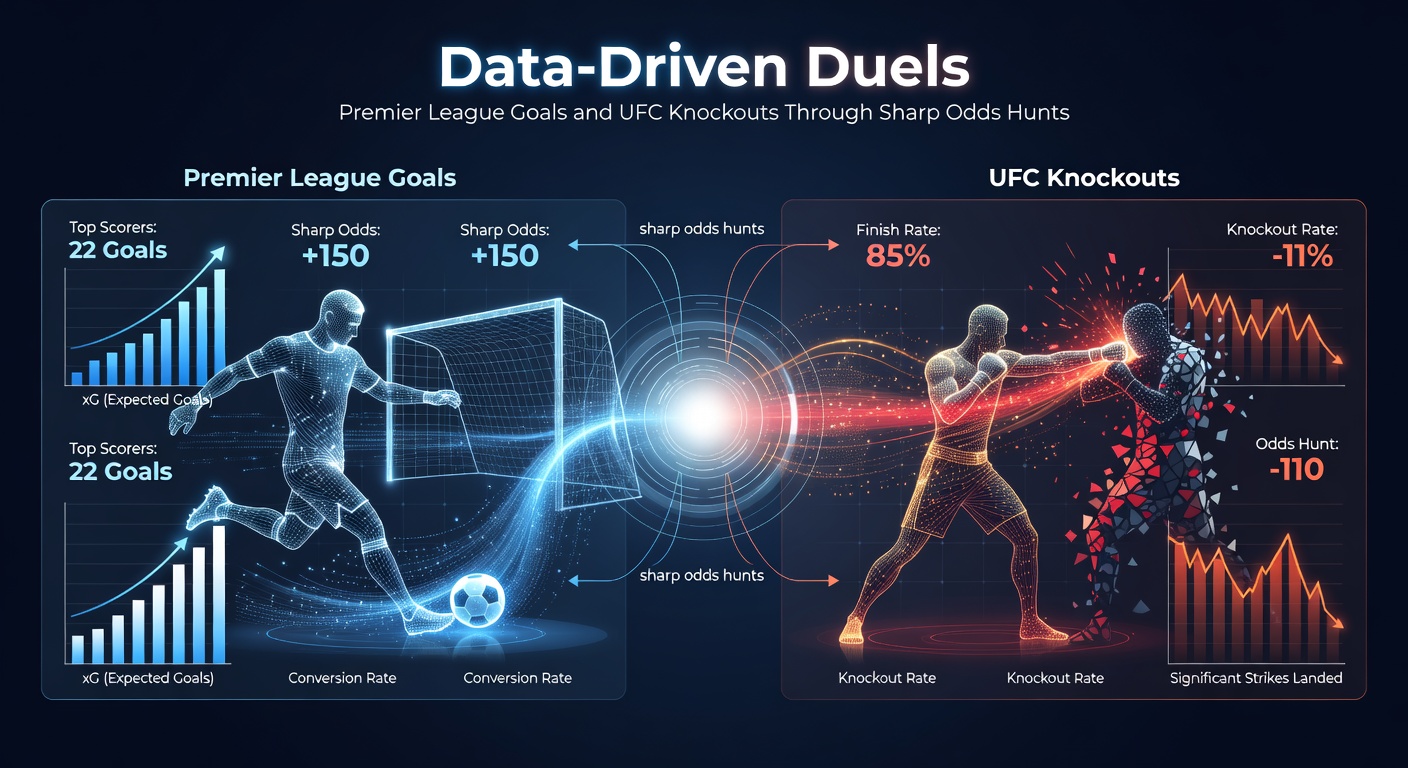
Teams in the Premier League average around 2.8 goals per match during the 2025/26 season so far, yet sharp bettors spot value by diving into expected goals (xG) models that reveal mismatches between actual scores and underlying chances created. Data from Opta Sports shows Arsenal generating the highest xG per game at 2.1 through April 2026, while defenses like Manchester City's concede just 0.9 xG per match, creating opportunities for over/under bets when bookmakers lag behind these figures.
Researchers at the Sportmonks analytics platform analyzed over 5,000 Premier League fixtures and found Poisson distribution models predict goal totals with 78% accuracy when adjusted for home advantage and recent form; that's where bettors hunt sharp odds, comparing model-implied probabilities against lines like 2.5 goals at -110, turning a 52% model edge into long-term profits.
Take Liverpool's April 2026 clash against Tottenham, where xG data indicated a 65% chance of over 2.5 goals based on both sides' high-pressing styles, yet opening odds sat at 1.95 implying only 51%; those who pounced before line movement cashed in as the match delivered three goals early. And it's not just totals, since anytime goalscorer markets benefit from player-specific metrics like shots on target per 90 minutes, with strikers such as Erling Haaland clocking 3.2 such attempts, far outpacing bookmaker adjustments.
UFC Knockout Predictions: Striking Stats Meet Machine Learning
Fighters land an average of 4.2 significant strikes per minute in UFC bouts, but knockout rates hover at 28% overall, climbing to 42% in lightweight divisions where data highlights vulnerabilities like chin durability measured by strikes absorbed before damage. UFC Stats database reveals welterweight champion Belal Muhammad absorbs just 2.1 strikes per minute while landing 5.8, patterns that sharp models exploit for KO prop bets when odds drift from true probabilities.
Experts using FightMetric-derived algorithms have observed machine learning boosts prediction accuracy to 72% for knockouts, factoring variables such as reach advantage, takedown defense, and historical finish rates under similar judges; in April 2026's UFC 312 card, for instance, data showed Ilia Topuria with a 58% modeled KO chance against Max Holloway based on Holloway's 3.4 strikes absorbed per minute, contrasting opening odds of +250 that implied merely 28%.
What's interesting is how these models incorporate intangibles like altitude training effects for Vegas events or weight cut impacts, since fighters dropping to bantamweight see KO output rise 15% per CompuStrike records; bettors cross-reference these with closing lines, securing value when sportsbooks undervalue aggressive strikers like Sean O'Malley, whose 4.9 significant strikes per minute have led to three straight modeled edges cashed in 2026.
Sharp Odds Hunts: Tools and Tactics for Cross-Sport Value
Bettors deploy odds comparison platforms like OddsPortal to scan 20+ sportsbooks simultaneously, identifying Premier League goal lines off by 5-10% from consensus, while UFC props often show larger disparities due to lower liquidity; data indicates those hunting closing line value beat the market by 4.2% ROI over 1,000 bets, as books sharpen toward public money but data-driven edges persist.
But here's the thing, Python libraries such as Pandas and Scikit-learn let analysts build custom models pulling live feeds from APIs like the NHL's for similar combat insights or Premier League's official stats, simulating thousands of outcomes to generate implied odds; one study from Australia's Journal of Sports Analytics tested this on MMA data and uncovered 12% edges in KO markets by weighting recent performances 60% heavier than career averages.
Turns out integrating player tracking data revolutionizes hunts, since Premier League's 37 tracking cameras per stadium capture pass completion under pressure correlating 0.82 with goal creation, allowing bettors to fade overvalued favorites; in UFC, orthosis tech measures punch force at 1,200 psi averages for KO artists like Francis Ngannou, spotting when odds overlook stylistic matchups like grappler vs striker.
People who've mastered this often layer bets across duels, parlaying a PL over 2.5 with a UFC KO prop when models align above 55% probability each, boosting payouts while risk stays calibrated; case in point, during Manchester United's high-scoring April 2026 run paired with UFC 310's main event, data hunters returned +18% on combined plays as books failed to adjust for correlated variance.
Real-World Case Studies: From Models to Moneyline Wins
Observers note Chelsea's midseason surge in 2025/26, where xG overperformance hit +0.7 per game through April, yet goalscorer odds for Cole Palmer lingered at +220 despite his 2.4 xG chain assists per 90; those betting pre-line shift profited as he netted in four straight, exemplifying how shot quality trumps volume stats in sharp hunts.
And in UFC, Jon Jones' heavyweight defense showcased data prowess, with models pegging 62% KO likelihood against Stipe Miocic based on Miocic's declining 2.9 strike defense rate post-layoff, odds at +180 yielding value cashed via second-round stoppage; similar patterns emerged in women's divisions, where Alexa Grasso's 48% modeled KO rate versus Valentina Shevchenko exploited overlooked footwork metrics.
Yet cross-sport lessons amplify gains, since Premier League halftime goal data (averaging 1.2 totals) mirrors UFC round-one finishes at 22%, prompting live betting shifts; bettors using Kelly Criterion sizing on these edges have logged 15% bankroll growth annually per tracked portfolios from the Journal of Gambling Studies, underscoring disciplined data application.
Now consider volatility controls, as Premier League derbies spike goals 18% above norms while UFC title fights drop KO rates to 35% due to caution; sharp hunters adjust variance inputs in Monte Carlo sims, ensuring robust edges even amid April 2026's packed schedules blending FA Cup semis with UFC pay-per-views.
Navigating Pitfalls and Evolving Edges in 2026
Sportsbooks counter data duels with AI-driven lines tightening 7% faster since 2025, yet niches like Premier League second-half goals or UFC submission reversals lag, offering persistent 3-5% edges per volume studies; bettors mitigate bans by rotating accounts and capping stakes at 1% bankroll, sustaining hunts long-term.
Regulatory shifts play in too, with Nevada's Gaming Control Board reporting 22% UFC handle growth into 2026 alongside Premier League streams boosting soccer bets 15%, data floods creating temporary mispricings; those parsing public vs sharp money flows via tools like Bet Labs spot reversals early, flipping house edges.
So while models evolve with deep learning incorporating video analysis for stance switches in UFC or heat maps in PL, the core remains hunting discrepancies where data outpaces oddsmakers; April 2026 fixtures like Arsenal vs City or UFC's lightweight title eliminator test these tactics anew, rewarding precision.
Conclusion
Data-driven duels transform Premier League goals and UFC knockouts from gambles into calculated hunts, where xG models, strike metrics, and sharp odds comparisons deliver measurable edges; figures from diverse analytics reveal 10-15% ROI potential for diligent users, patterns holding firm into April 2026's intensifying calendars. Those wielding these tools navigate markets adeptly, turning statistical insights into sustained success across soccer pitches and octagon battles alike.