Layered Incentives Unpacked: Tracing How Free Offers Reshape Strategy Across Poker Rooms and Multi-Sport Odds Tables
Theo Hoffmann · Jul 26, 2026

Layered Incentives Unpacked: Tracing How Free Offers Reshape Strategy Across Poker Rooms and Multi-Sport Odds Tables
Free offers in gambling environments operate through multiple tiers that influence player decisions at every stage, and observers note how these structures extend from poker rooms into multi-sport odds tables where participants adjust their approaches based on promotional layers. Data from industry reports shows that operators deploy welcome bonuses, reload incentives, and loyalty multipliers simultaneously, creating pathways that guide both casual and experienced users toward specific games and betting formats.
Mechanics of Layered Free Offers in Poker Rooms
Poker rooms implement free offers by stacking entry incentives with ongoing rewards, and research indicates this combination alters session lengths along with hand selection patterns. Players often receive initial deposit matches that convert into tournament buy-ins, while subsequent layers add cashback percentages tied to rake contributions, and studies from academic institutions highlight how these elements encourage participants to extend their time at the tables rather than cashing out early. Those who've examined player data across North American venues find that free tournament entries frequently lead to more aggressive early-stage play because the risk is offset by the promotional value, whereas cash game strategies shift when reload bonuses reset at set intervals.
Take one operator network that introduced a three-tier loyalty system in early 2026, where base rewards unlocked after a fixed number of hands, mid-level perks included free bet multipliers during peak hours, and top-tier access granted exclusive satellite entries; figures reveal increased table occupancy during promotion windows as a direct result. Experts have observed that such layering reduces the perceived cost of variance, prompting players to enter higher-stakes games they might otherwise avoid.
Adaptations in Multi-Sport Odds Tables
Multi-sport odds tables incorporate free offers through matched stakes on specific events, accumulators, and live betting credits, and evidence suggests these tools reshape how bettors evaluate probability across football, basketball, and emerging markets like esports. Operators structure the incentives so that an initial free bet must be placed on a designated sport or league before additional layers, such as profit boosts or insurance on losing accumulators, become available, and this sequencing steers volume toward particular fixtures.
According to a report published by the American Gaming Association, layered promotions in sports betting environments increased handle on secondary markets by measurable margins during the 2025-2026 season, particularly when free bet credits applied to midweek events rather than marquee fixtures. Observers note that bettors respond by constructing larger parlays when insurance layers protect against single-leg failures, while single-bet strategies gain traction once cashback thresholds reset weekly. What's interesting is how the same user might apply conservative stake sizing in poker cash games yet pursue higher multipliers on sports odds tables when promotional layers reduce downside exposure.
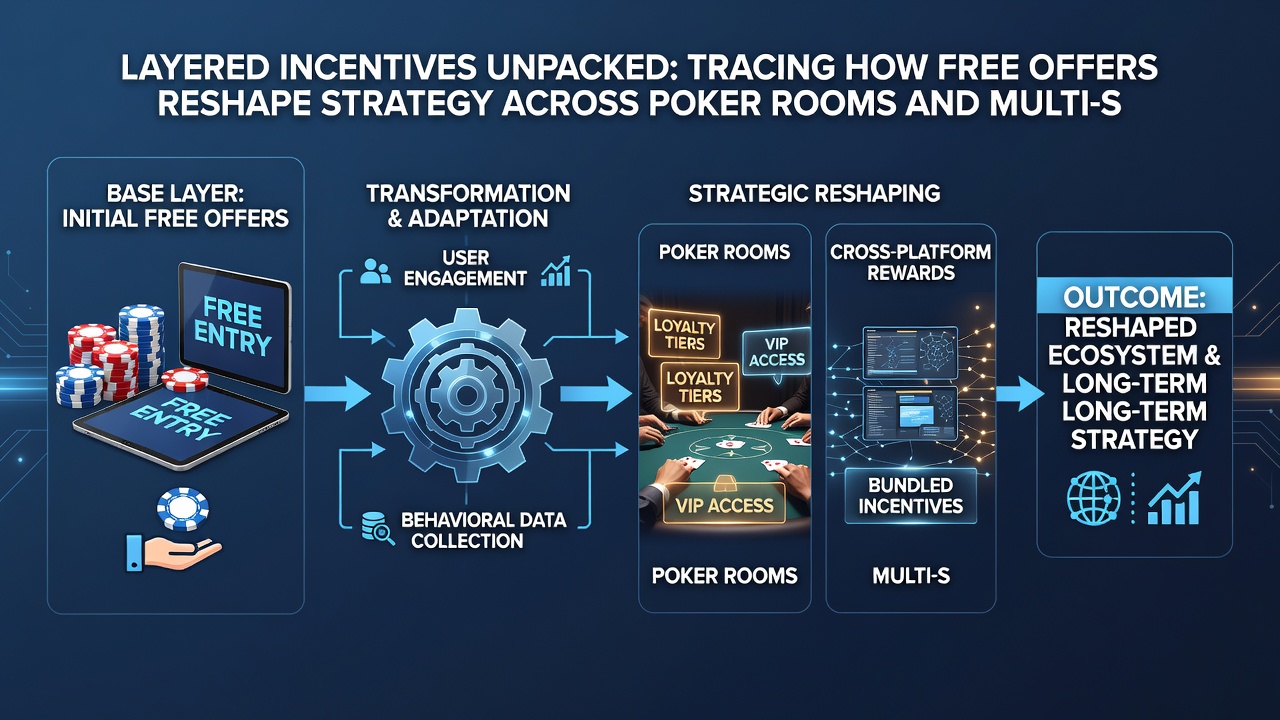
One study released by researchers at the University of Sydney examined cross-platform behavior and found that users who received free bet credits on soccer matches subsequently transferred similar risk tolerances to poker sit-and-gos, selecting wider ranges in early levels because the promotional buffer absorbed initial losses. The pattern holds across regions, with Canadian provincial data indicating parallel shifts when operators align free offer calendars between poker networks and sports books.
Strategic Adjustments Across Platforms
Players adapt by timing their entries around bonus reset periods, and data shows that multi-account management becomes more common when operators restrict stacking across poker and sports verticals. Those monitoring transaction logs report that free offer users often hedge poker tournament variance with smaller sports bets placed on correlated outcomes, creating informal diversification that the promotional structure itself enables. July 2026 saw several major networks synchronize their loyalty calendars, aligning poker milestone rewards with sports accumulator boosts, and this coordination produced measurable spikes in cross-vertical activity according to internal operator metrics shared with trade associations.
Betting patterns further evolve when free offers include time-limited multipliers that apply only to live betting windows; participants then monitor multiple sports simultaneously, placing smaller initial stakes to unlock larger boosted positions later in the same session. Researchers discovered through behavioral tracking that such mechanics increase the number of markets viewed per user, expanding engagement beyond primary sports into niche offerings like darts and greyhound racing where odds tables display the same layered incentives.
Regulatory Context and Market Data
Government agencies in multiple jurisdictions track how these incentive structures interact with responsible gambling measures, and reports from the Nevada Gaming Control Board document steady growth in promotional volume without corresponding rises in dispute rates. Industry organizations note that transparency around wagering requirements remains a focal point, with operators required to display clear terms before players activate each layer. External analyses from European research consortia indicate that layered free offers maintain higher retention rates compared to single-bonus models, though the effect varies by game type and user segment.
Conclusion
Layered incentives continue to influence decision-making frameworks across poker rooms and multi-sport odds tables, with operators refining structures based on observed behavioral responses. Data consistently shows that participants adjust stake sizes, game selection, and session timing in direct relation to available promotional layers, creating interconnected strategies that span both verticals. As markets evolve through 2026, the alignment of reward calendars across platforms suggests these patterns will persist, supported by ongoing measurement from regulatory and academic sources.