Tracing Reward Pathways from Skill-Based Card Platforms to Data-Driven Team Sport Predictions
Klara Neumann · Aug 25, 2026
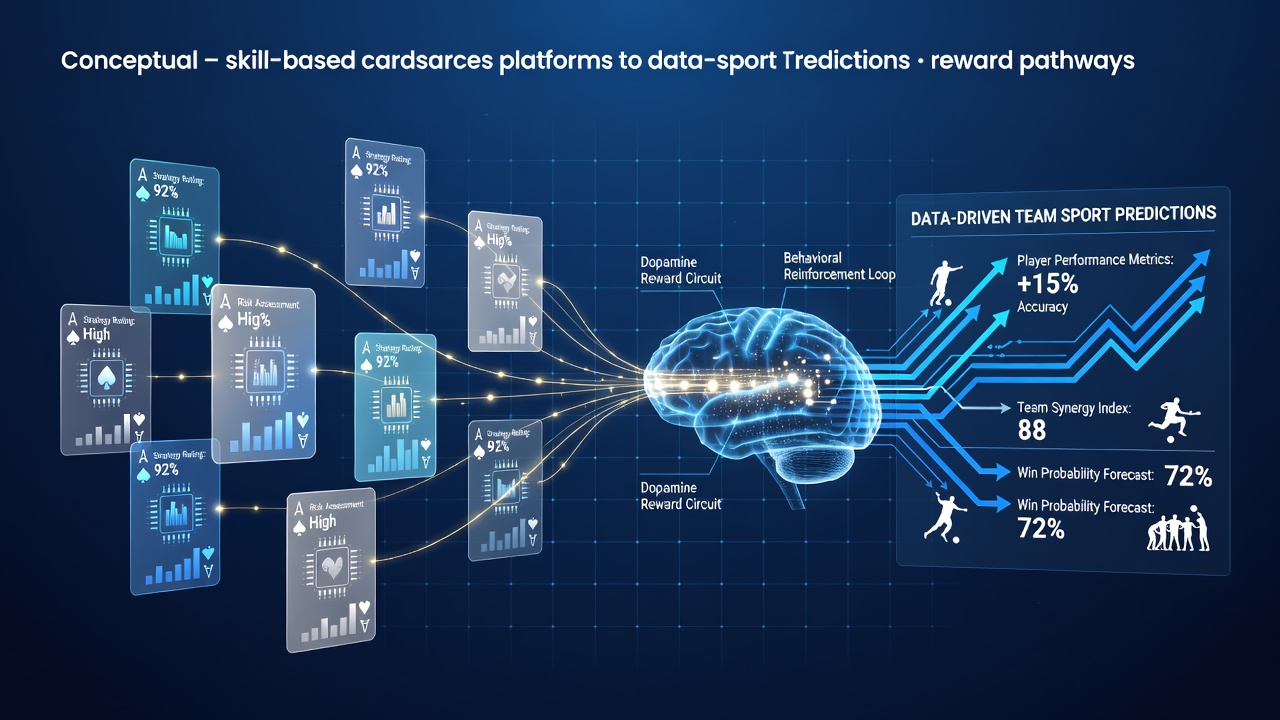
Tracing Reward Pathways from Skill-Based Card Platforms to Data-Driven Team Sport Predictions
Skill-based card platforms operate through layered reward systems that track player decisions across thousands of hands, and these systems generate datasets on risk assessment, pattern recognition, and probabilistic thinking. Observers note that such platforms, including poker networks and fantasy card leagues, record metrics like fold frequencies, bluff success rates, and session durations, which researchers then map onto broader behavioral models. Data from these environments flows into machine learning pipelines where algorithms identify transferable cognitive patterns, and those patterns appear in predictive frameworks for team sports outcomes.
Mechanics of Reward Structures in Card Environments
Reward pathways in card platforms function through tiered loyalty programs, tournament payouts, and real-time bonus triggers that activate based on consistent performance thresholds. Players accumulate points for strategic choices rather than pure chance outcomes, while platforms adjust reward multipliers according to historical accuracy in high-pressure scenarios. Studies from academic institutions reveal that participants who engage with these incentive layers show measurable improvements in sequential decision-making, and this improvement correlates with elevated engagement metrics across sessions lasting multiple hours.
Platforms capture granular telemetry on every action, from bet sizing to timing tells, and feed the information into player profiles that evolve over months of activity. Those profiles contain variables such as aggression indices and adaptation rates to opponent tendencies, and analysts apply clustering techniques to group similar behavioral signatures. The resulting clusters allow platforms to personalize reward delivery, which in turn sustains longer user retention periods and produces denser datasets for downstream applications.
Data Transfer from Card Analytics to Sports Modeling
Researchers have traced how statistical features extracted from card play translate into feature engineering for team sport prediction engines. Decision trees built on poker hand histories, for instance, share structural similarities with models that forecast basketball possession outcomes or soccer set-piece probabilities. Variables such as expected value calculations and variance tolerance transfer directly when analysts normalize them against sport-specific parameters like player fatigue indexes and team chemistry scores.
Industry organizations including the European Gaming and Betting Association have documented collaborations between card platform operators and sports analytics firms that exchange anonymized behavioral datasets under strict privacy protocols. These exchanges occur through secure APIs that strip personally identifiable information while preserving relational patterns, and the process enables sports models to incorporate proxies for psychological resilience drawn from card environments. In August 2026, several North American operators expanded such data-sharing agreements to include collegiate athletics datasets, broadening the scope of cross-domain validation.
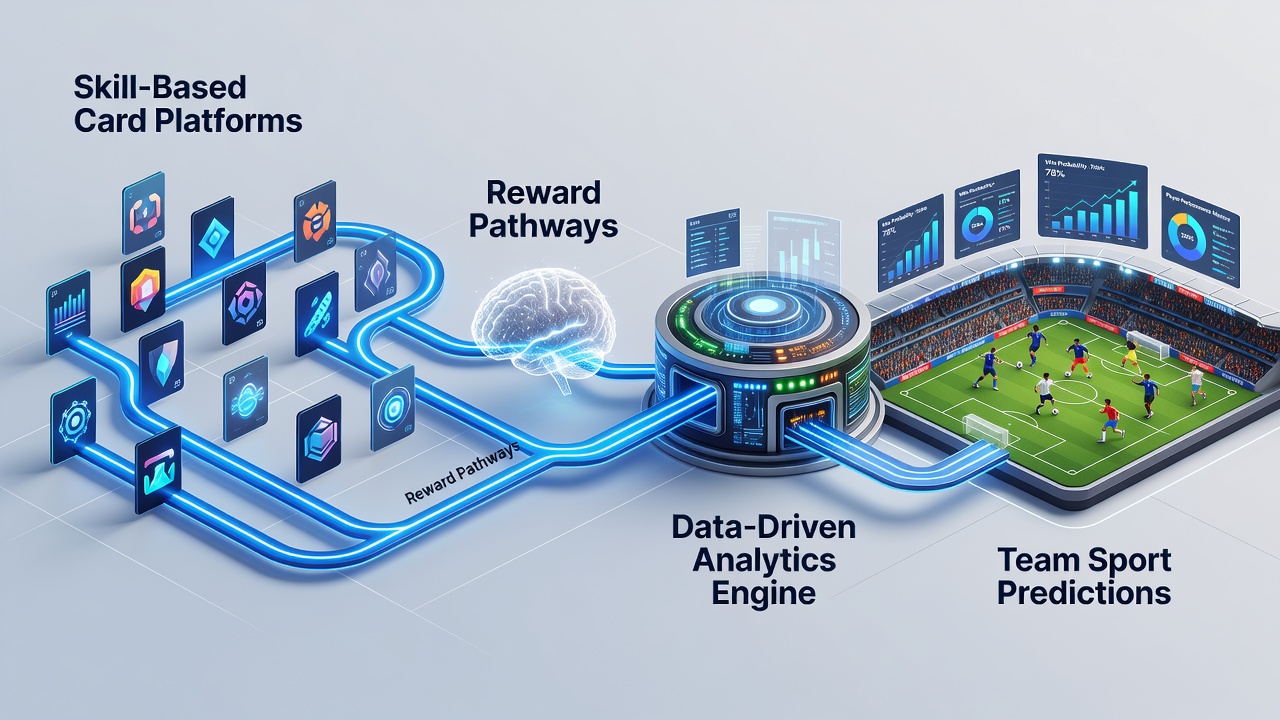
Integration into Team Sport Prediction Systems
Prediction platforms for team sports now embed modules that ingest processed signals from card-derived reward pathways, and these modules recalibrate probabilities when live game data diverges from historical baselines. A basketball model might adjust its three-point attempt forecast after detecting elevated variance tolerance signals that mirror patterns previously observed in high-stakes card tournaments. Similarly, soccer outcome simulators incorporate adaptation rate metrics to refine expected goal differentials during matches involving squads with fluctuating lineups.
Government agencies such as the Australian Communications and Media Authority track regulatory frameworks that govern how operators may combine datasets across entertainment verticals, and compliance documentation shows that consent mechanisms must remain granular. Those frameworks require explicit separation between reward system data and sports prediction outputs, yet they permit aggregated trend analysis that strengthens model robustness without exposing individual player identities. Academic papers from institutions including the University of Sydney outline validation protocols that test transfer accuracy across domains, confirming that certain decision-quality indicators maintain predictive power when applied to team dynamics.
Case Examples of Cross-Domain Application
One documented implementation involved a European card network supplying normalized aggression indices to a North American sports analytics provider, which then layered the indices onto NFL play-calling models during the 2025 season. The integration produced measurable lifts in fourth-down decision accuracy when compared against control models lacking the external signals. Another instance emerged in Australian rugby league forecasting, where reward pathway data from online card platforms helped calibrate fatigue-response curves that account for psychological momentum shifts mid-match.
Platforms continue to refine these linkages through iterative testing cycles that compare predicted versus actual results across thousands of events. Metrics tracked include precision at various probability thresholds and calibration error rates, while operators adjust weighting coefficients to balance card-derived features against traditional sports statistics such as player efficiency ratings and historical head-to-head records.
Conclusion
The pathways connecting skill-based card platforms to data-driven team sport predictions rest on shared principles of probabilistic reasoning and behavioral measurement that researchers continue to quantify through expanding datasets. Regulatory bodies across regions maintain oversight of data flows, while technical integrations advance through standardized feature mappings and validation studies. As operators in August 2026 and beyond refine these connections, the underlying architectures demonstrate how reward structures originally designed for card environments contribute structured signals to broader sports analytics frameworks.